
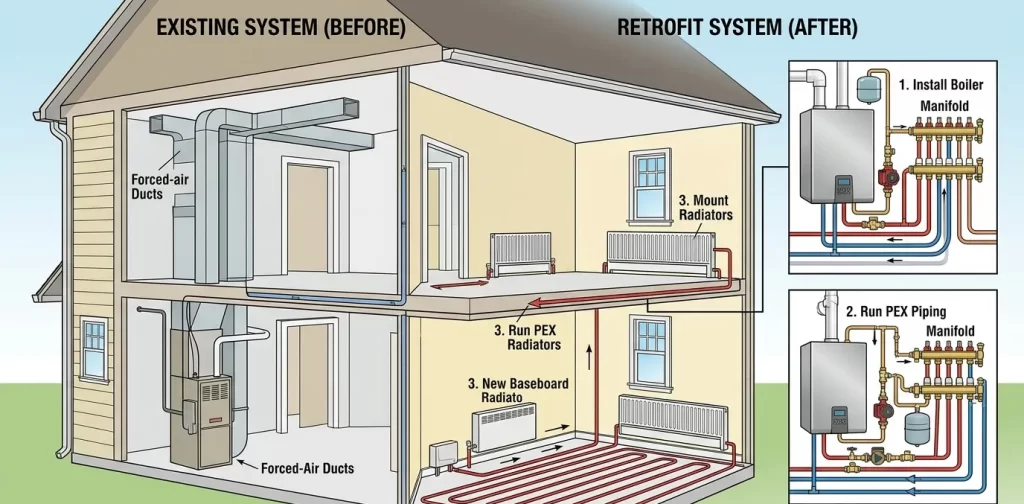
Modernise your home comfort with retrofitting hydronic heating by Ignite Heating & Cooling Melbourne specialists for efficient, compliant upgrades.
Established properties across Victoria are increasingly upgrading to hydronic heating for Melbourne homes to achieve steady, energy-efficient warmth. Retrofitting hydronic heating allows radiant systems to be integrated into existing structures without requiring a full rebuild. Careful coordination between structural assessment and thermal modelling ensures long-term performance and minimal building disruption.
Structural Planning Requirements for Retrofitting Hydronic Heating
Successful retrofitting of hydronic heating begins with a clear understanding of the home’s construction type. Concrete slabs, suspended timber floors, and multi-level dwellings each influence pipe routing, manifold placement, and permissible floor build-up heights. Accurate site measurements prevent conflicts with door clearances, stair transitions, and ceiling constraints.
Subfloor condition, insulation levels, and plant space allocation must also be reviewed before installation proceeds. Between-joist systems can preserve finished flooring in raised homes, while low-profile overlay panels minimise height impact during renovations. These structural decisions directly affect response time and overall heating balance.
Thermal Performance Considerations in Retrofitting Hydronic Heating
Thermal efficiency shapes equipment sizing and operational stability. Insulation quality, glazing performance, and draught sealing determine how effectively warmth is retained inside the building envelope. Room-by-room heat-loss calculations guide water temperature settings and zoning configuration.
Many upgrades now incorporate modern hydronic heat pump systems to improve energy performance and reduce reliance on conventional gas boilers. Lower operating temperatures combined with insulated flooring improve efficiency while supporting National Construction Code compliance. Proper commissioning confirms circulation balance and consistent radiant output.
System Configuration and Installation Options
System layout depends on structural conditions and renovation scope. Installation methods may include:
Common retrofit configurations include:
- In-Slab Heating: Pipes embedded within concrete distribute radiant warmth evenly across living zones, ideal for major renovations.
- Low-Profile Panel Systems: Pre-routed panels sit above existing substrates, limiting floor height increases and reducing demolition work.
- Between-Joist Installation: Pipework fixed beneath suspended timber floors allows heating integration without altering finished surfaces.
- Hydronic Radiators: Wall-mounted panels suit targeted heating upgrades and connect efficiently to central plant systems.
- Zoned Controls and Thermostats: Independent room control improves energy management and supports tailored comfort levels.
These structural refinements enhance comfort, consistency, and clearly demonstrate the measurable benefits of underfloor heating, including silent operation, even temperature distribution, and improved indoor air quality.
Implementation And Compliance for Retrofitting Hydronic Heating
Clear installation sequencing reduces disruption and protects existing finishes. Pipework, manifolds, and plant equipment are positioned before reinstating flooring and wall linings to prevent unnecessary alterations.
Compliance with the National Construction Code and relevant Australian plumbing standards guides safe integration. We conduct insulation verification, pressure testing, and hydraulic balancing to ensure retrofitting hydronic heating performs reliably and aligns with regulatory requirements across Melbourne properties.
Ignite Heating & Cooling performs detailed structural evaluations and calibrated system setups to maintain stable, energy-efficient warmth. Each project is configured to suit the property layout while protecting the integrity of the existing build.
Budget Factors in Hydronic Retrofit Projects
Hydronic retrofits involve cost variables that differ from new-build installations, particularly when assessing underfloor heating installation costs in existing homes. Structural access, system configuration, and compliance requirements influence overall project planning.
Key budgeting considerations include:
- Existing floor structure and access conditions
- Insulation and thermal performance targets
- Heat source and plant configuration
- Zoning controls and hydraulic balancing
- Regulatory and compliance requirements
Reliable Hydronic Heating Upgrades for Melbourne Homes
Hydronic retrofits demand experience, planning accuracy, and compliance awareness. Well-executed systems enhance comfort while supporting sustainable energy use in established homes.
Ignite Heating & Cooling applies detailed structural assessment and thermal modelling to every retrofitting hydronic heating project across Melbourne. Each installation is calibrated to suit the property layout and performance objectives, ensuring stable, energy-efficient warmth without unnecessary building impact.
Contact us to plan your hydronic heating upgrade with confidence.
Related Blog Article: Smart Underfloor Heating: Upgrade Commercial Buildings for Efficiency & Comfort