
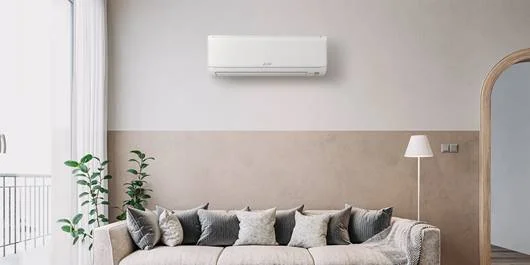
Plan split system installation for Melbourne homes managing dust and seasonal pollen, with model-specific filtration and professional sizing.
A split system can improve temperature control and circulate air through its installed filters, but it is not an asthma treatment or a universal air purifier. Buyers should compare documented filtration, room sizing, maintenance and ventilation requirements before selecting a model.
Can a Split System Reduce Indoor Dust and Pollen?
A split system draws room air through filters before recirculating conditioned air. Depending on the model and filter technology, this may capture some larger airborne particles. Performance varies substantially, so claims about pollen, fine particles, odours, bacteria or allergens must come from the manufacturer’s specifications.
Ignite Heating & Air Conditioning provides split system and multi-split air conditioning design, sales, installation, servicing and repairs in eastern Melbourne. The service is verified; “asthma and allergy-friendly split system” is not a documented product category on the website.
Match the Unit to the Room and Occupants
Correct capacity affects comfort, run time and moisture behaviour. An oversized unit may reach the thermostat setting quickly without operating as expected for the space, while an undersized unit may run continuously. Assessment should consider room dimensions, insulation, glazing, orientation, occupancy and adjoining areas.
- Filter specification: confirm the exact filter type, tested capability, cleaning method and replacement availability.
- Airflow direction: position the indoor unit to distribute air without creating an uncomfortable draught across beds or seating.
- Outdoor air: remember that most wall-mounted splits recirculate indoor air rather than provide fresh-air ventilation.
- Noise: compare published indoor and outdoor sound levels for bedrooms, studies and boundary-sensitive locations.
- Efficiency: review the energy rating and part-load performance for Melbourne’s heating and cooling conditions.
- Maintenance access: allow safe access for filter cleaning, coil servicing, drainage checks and fault diagnosis.
Filtration Does Not Replace Source Control
Reduce dust and pollen at the source through appropriate cleaning, entry controls and building maintenance. Moisture intrusion, condensation and visible mould require investigation; installing another air conditioner does not repair a leak or remove contaminated material.
The National Asthma Council Australia indoor-air guidance recommends managing indoor triggers and ventilation rather than relying on unsupported health claims. Anyone seeking medical advice should speak with a qualified health professional.
Installation and Ongoing Maintenance Matter
Professional installation must address mounting, pipework, condensate drainage, electrical supply, clearances and commissioning. Ignite also offers service, maintenance, and repairs so homeowners can plan for ongoing care rather than treating installation as the end of system performance.
Dirty filters can restrict airflow and reduce performance. Follow the manufacturer’s cleaning and replacement intervals, and arrange servicing when airflow, odour, drainage, noise or temperature control changes.
Request a Model-Specific Recommendation
Prepare the room dimensions, occupancy, insulation details, preferred operating times and key dust or pollen concerns. Then compare actual model documentation through Ignite’s heating and cooling services rather than accepting a broad “allergy-friendly” label.
Ready to obtain a properly scoped quote? Contact Ignite Heating & Air Conditioning for split system installation tailored to your property, comfort priorities and documented equipment features.